Summer in a Perth Garage: Heat, Expansion and Why Your Door Plays Up in February
Every February the same calls come in. The door was fine all winter and now it sticks, or reverses, or has started making a noise it never made before. Nothing has been touched. Something has changed, though, and usually it is one of three things.
1. Metal moves
A large steel door sitting in direct Perth sun gets considerably hotter than the air around it, and steel expands as it heats. On a door that was running with reasonable clearance, that expansion can be enough to make it bind slightly in the guides at the hottest part of the day and run normally again by evening.
This is why a door that only misbehaves in the afternoon is a genuinely useful thing to report. It points at clearance and alignment rather than at anything electrical, and it usually resolves with adjustment rather than parts.
The same expansion works on the frame. Timber jambs move with heat and humidity, and a jamb that has dried out over a long hot spell can change the geometry the door was set up against.
The related one: a spring that lets go at night
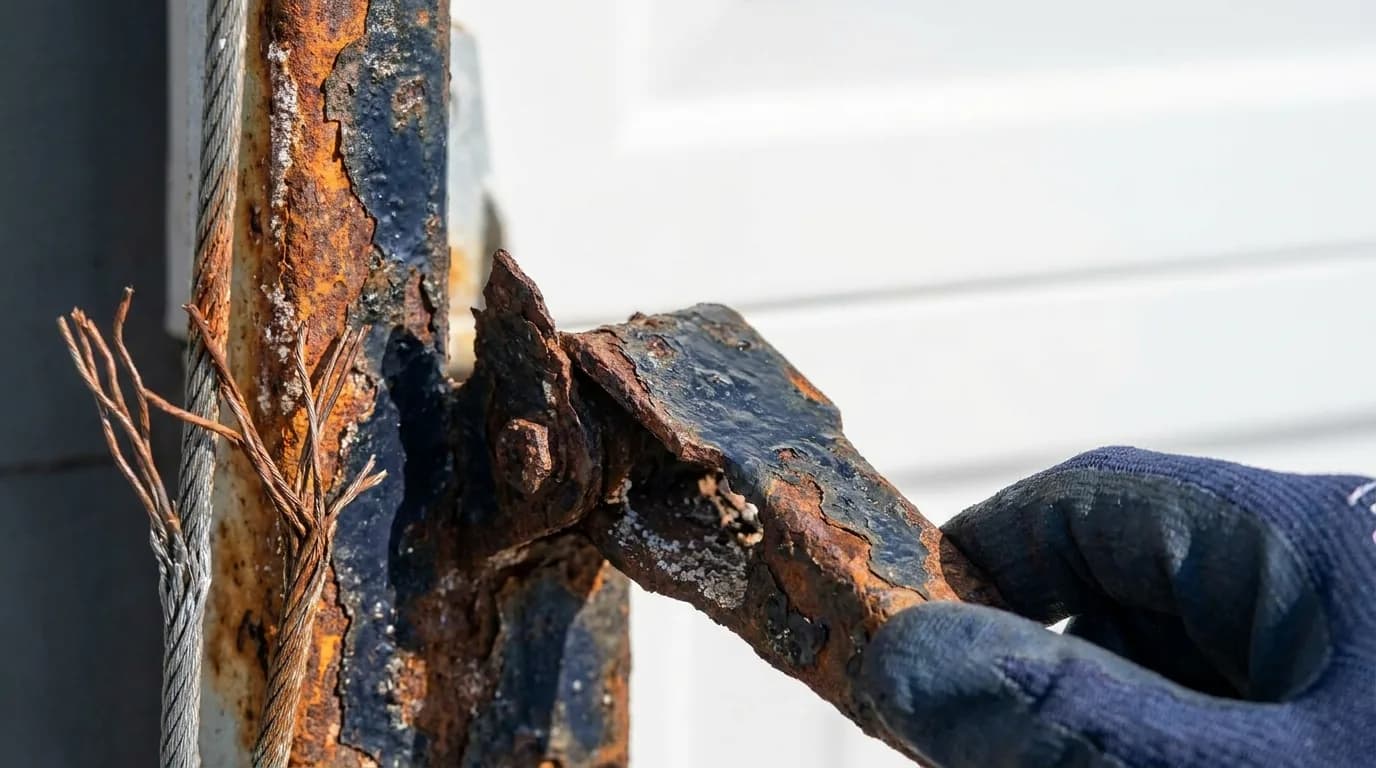
A great many broken springs announce themselves after dark. That is contraction rather than expansion — metal cooling after a hot day, and a spring already at the end of its fatigue life finding the last straw. If you hear a bang from the garage at ten at night, that is very likely what it was, and the advice is the same as always: leave the door alone and call. We have covered why in the article on springs.
2. The sun gets into the sensors
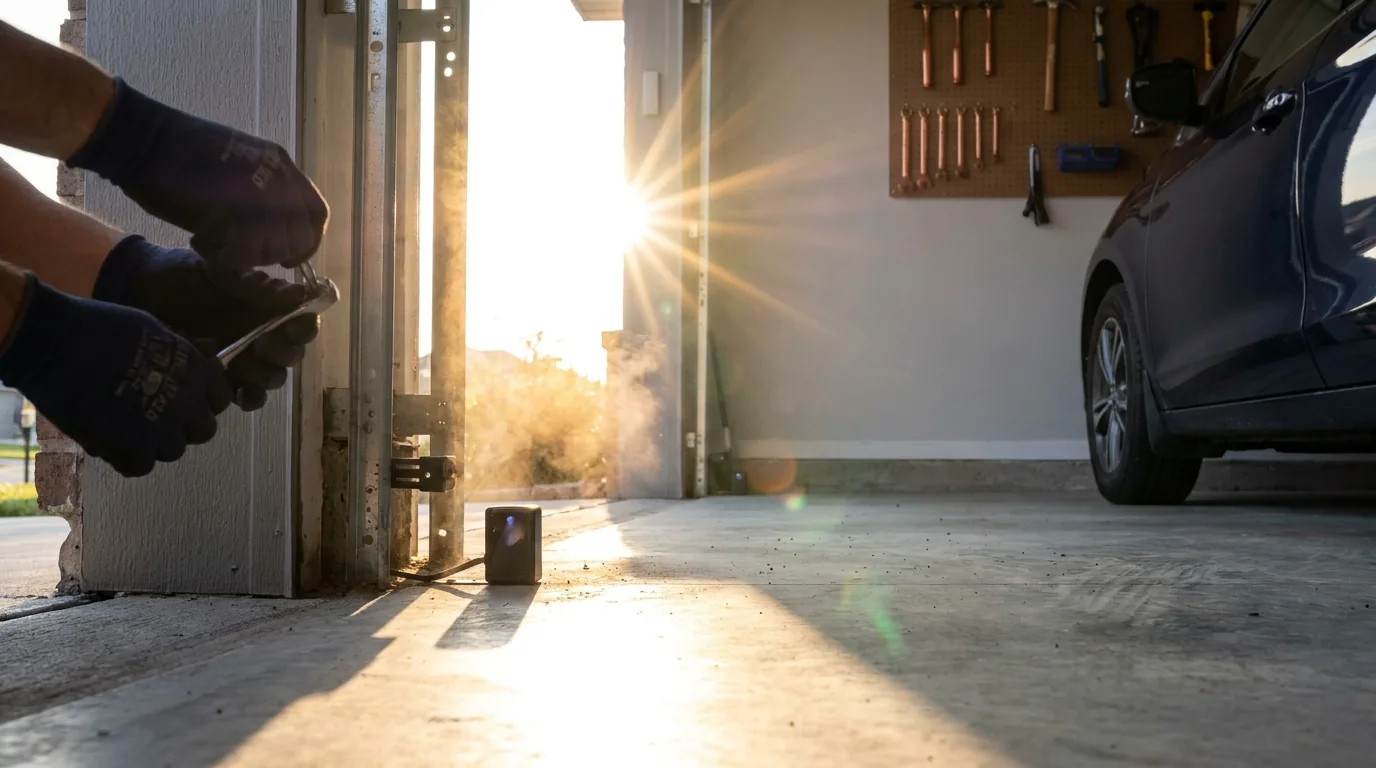
The safety beam works by one sensor detecting light from the other, and low, direct sunlight striking the receiving lens can interfere with that. Perth's summer afternoon sun is low, strong and comes from the west — which, on a west-facing garage, is exactly the angle that shines straight down the beam path.
The signature is unmistakable once you know it: the door refuses to close only at a particular time of day, and works perfectly at every other. It is usually solved by repositioning or shielding a sensor rather than replacing anything.
Worth doing at the same time: wipe both lenses. Summer is also when blown sand and dust build up fastest, and a fine film on a lens does the same thing more consistently. Between the two, this accounts for a large share of our summer "door won't close" calls — the full checklist is in what to check before you call anyone.
3. The garage is not a garage any more
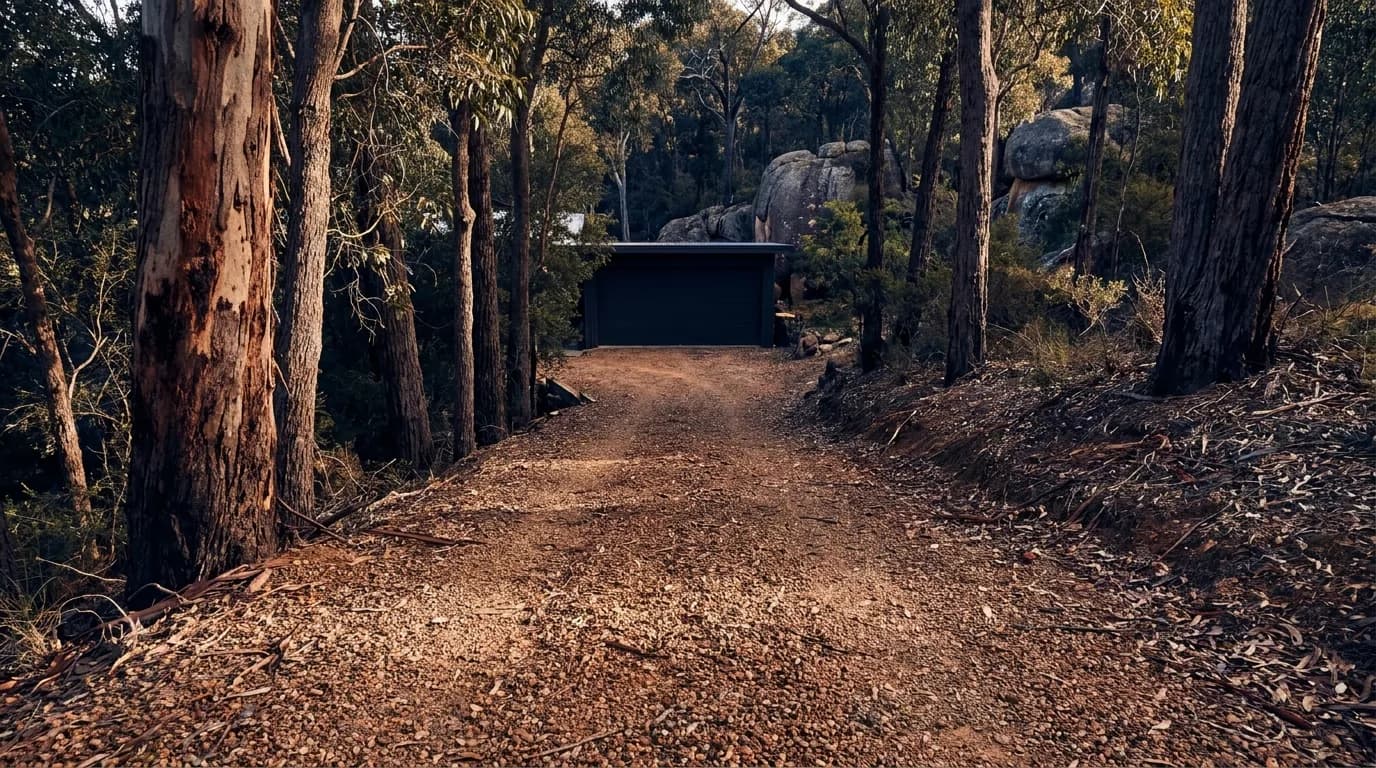
A very large number of Perth garages are now workshops, gyms, home offices and storage for things that do not enjoy being cooked. An uninsulated west-facing door in a Perth summer turns that space into an oven — the door itself becomes a radiant panel pushing heat inward for hours after the sun has moved off it.
If that describes your garage, insulation is the single most effective change available, and it is worth more than most people expect. An insulated door also runs noticeably quieter, which matters if there is a bedroom above or beside it. It is one of the more common reasons people move from a plain steel door to an insulated one at replacement time rather than for appearance.
Two cheaper things also help. A properly sealed bottom rail and intact weather strips keep hot air, dust and pests out — perished seals are extremely common and cheap to replace. And ventilation matters: a garage with no airflow holds heat overnight.
What summer does to the motor
Motors are the other seasonal casualty, for two reasons that compound. Heat is hard on electronics generally, and a motor mounted near the roof of an uninsulated garage is sitting in the hottest air in the building. Then there are the storms — Perth's summer storms and the power fluctuations around them kill more boards and capacitors here than mechanical wear does.
If your motor has become intermittent in the heat, that is worth looking at before it fails completely. Capacitors and boards are repairable items rather than automatic replacements, and we carry the common ones — a motor repair is frequently a component rather than a unit.
A short summer checklist
- Wipe the safety beam lenses. Two seconds.
- Clear the bottom channel — summer is peak season for blown sand and leaf litter.
- Note the time of day any fault occurs, and tell us. It is diagnostic.
- Check the bottom seal is intact, for heat, dust and pests alike.
- If the door has started sounding heavier, do not wait for it to fail.
- Do not spray lubricant into roller door guides — in summer especially, it collects sand and becomes grinding paste.