How Often Should a Perth Garage Door Be Serviced? A Straight Answer

Ask the Perth garage door industry how often your door should be serviced and you will get "regularly", "periodically", or "as needed". None of those is an answer. It is a reasonable question with a knowable answer, so here is ours.
The interval
- **Within roughly 3 km of the coast — around every six months.** Salt reaches the springs, cables, brackets and fixings well before anything shows on the face of the door.
- **Roughly 3–7 km from the coast — around every eight months.** The sea breeze still carries salt to the hardware, without the full beachfront exposure.
- **Inland — around every twelve months** for a typical household door.
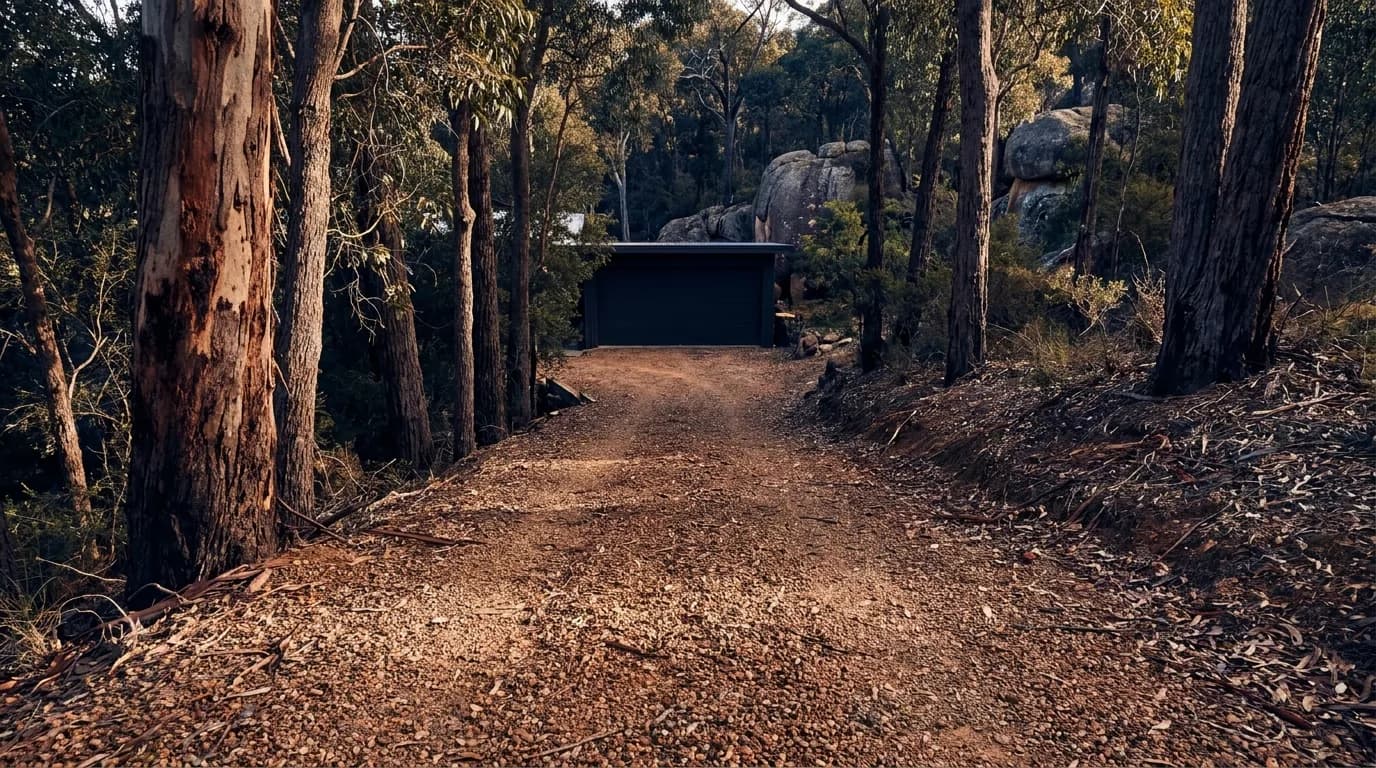
- **Above the Darling Scarp — around every twelve months, sooner on an unsealed driveway.** Up in the hills the wear factor is gravel dust in the guides rather than salt, and a long gravel approach can halve the interval.
- **Any door doing more than about six to eight cycles a day — shorten it regardless of where you live.**
That last point is the one most often missed. Springs are rated in cycles, not years. A household that opens the door four times a day and one that opens it twelve times a day are running the same component on completely different timelines, and the calendar does not know the difference.
Why the coastal number is half the inland one
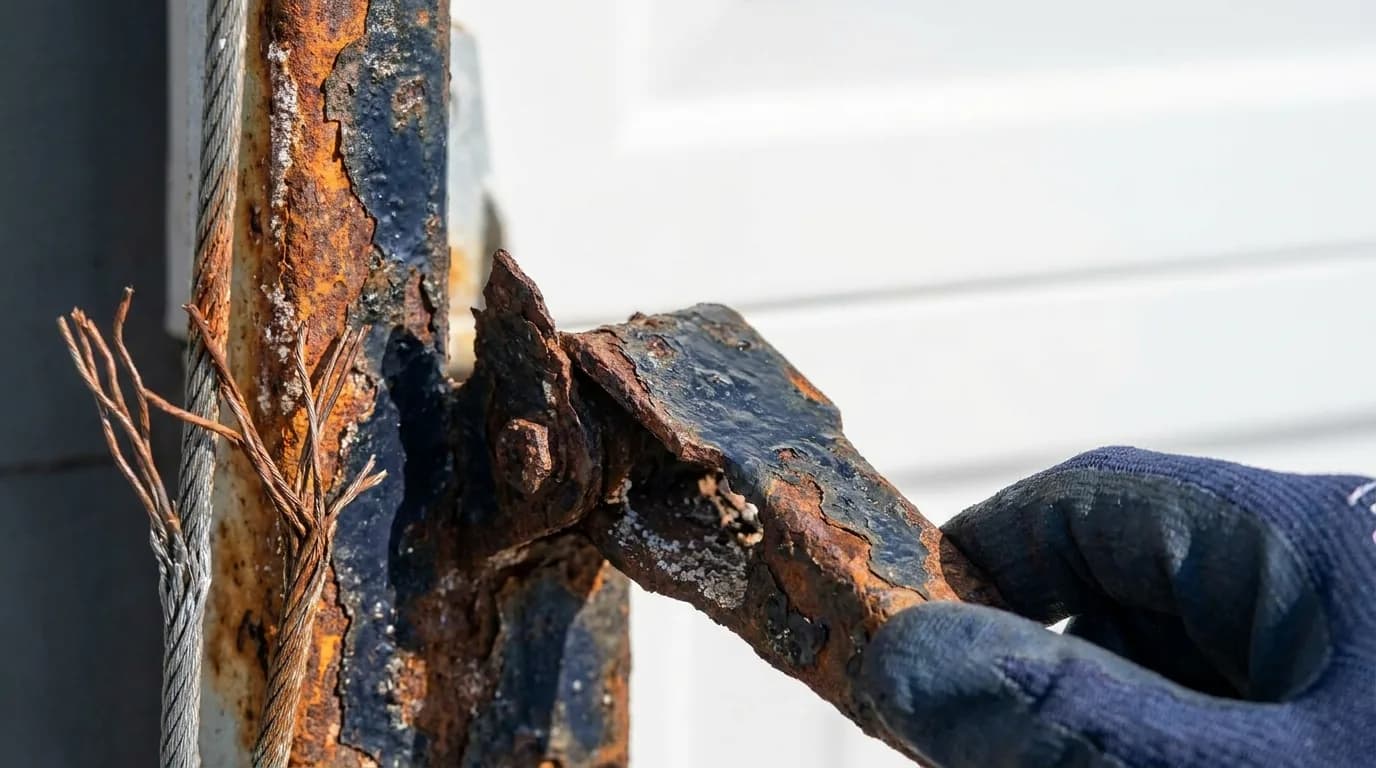
Because the parts that fail are the parts salt reaches first, and they are not the parts you can see. We have written about this at length in what salt air actually does to Perth hardware, but the short version is that a coastal door's springs, cables, flag brackets and bearing plates age materially faster than the same components ten kilometres inland, while the visible door skin ages at much the same rate. Servicing on appearance therefore under-services coastal doors quite badly.
What a real service includes
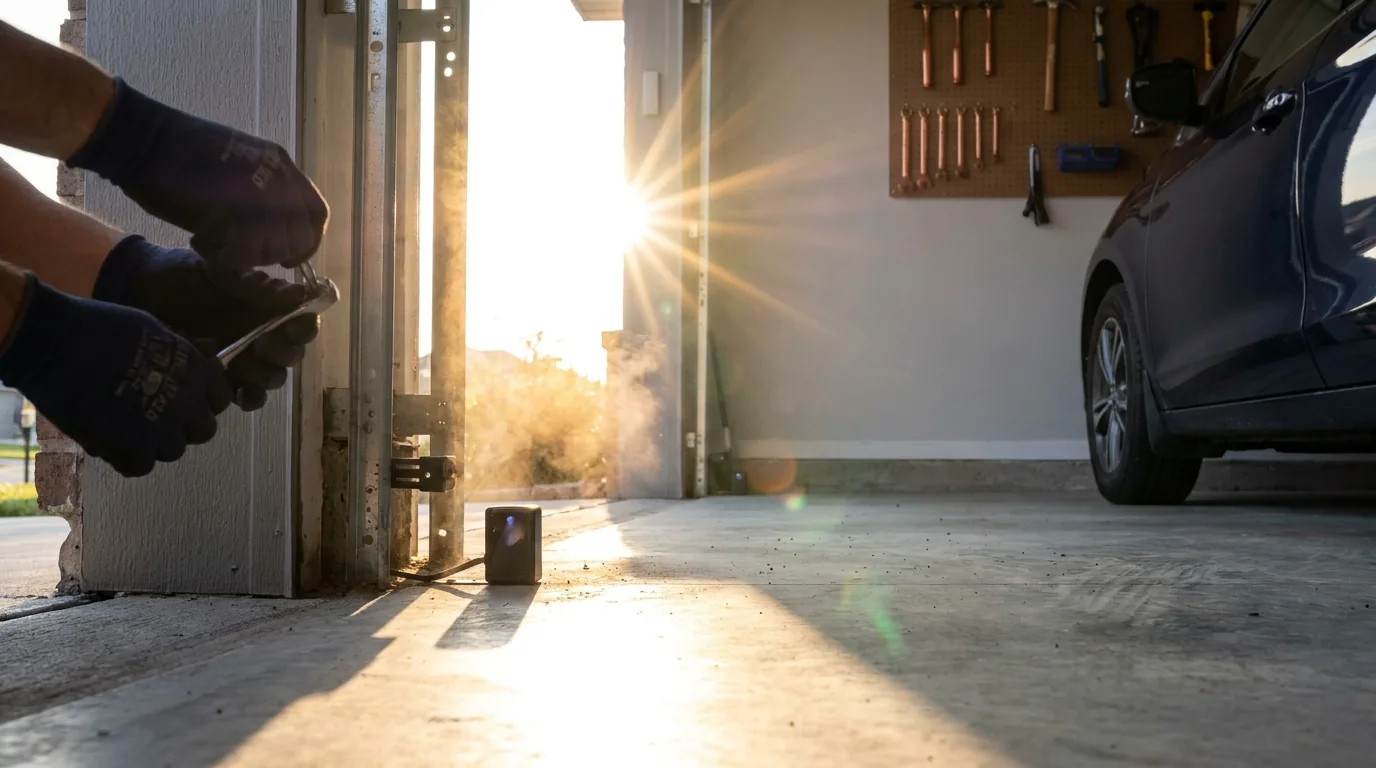
This matters, because "service" is not a protected term and a cheap one can mean somebody spraying lubricant around for fifteen minutes. A proper service is a mechanical inspection with a written outcome. Ours covers:
- Spring tension check and fatigue assessment
- Cable inspection along its full length and at the drums, where fraying starts
- Drum, shaft and bearing condition
- Roller, barrel and bearing lubrication or replacement
- Guide and track cleaning, clearing and realignment
- Bottom rail inspection **from the inside face** — the surface that actually corrodes
- Corrosion assessment on all exposed hardware
- Motor service: drive, travel limits, force settings, and the battery backup if fitted
- Safety beam alignment and an auto-reverse test
- A door balance test **by hand**
- Seal, weather strip and pest-gap check
- A written condition report listing what is wearing and roughly when it will need attention
The two items that tell you whether it was a real service
If nothing else, check that these two happened. **A hand balance test:** the motor is disconnected and the door is lifted manually. A correctly balanced door stays where you leave it, half-open included. If it drops or flies up, the spring is wrong and everything else is downstream of that. **An auto-reverse test:** the safety function that stops a closing door when something is underneath it. It drifts out of adjustment silently, and it is the only thing standing between the door and whatever is beneath it.
A service without those two is a lubrication visit. It is not worthless, but it is not what you paid for.
Why bother when nothing is wrong?
Because that is the entire point. Almost every failure we attend was visible months earlier to someone who knew where to look — a spring showing fatigue, a cable starting to fray at the drum, a bearing beginning to dry out, a rail going from the inside.
The practical difference is not really about money, though it usually costs less too. It is that a fatiguing spring found on a service is a booked appointment on a Tuesday, and a fatiguing spring found by failing is a Sunday night with the car locked in and the house standing open. Same part, same job, very different evening.
There is also a safety argument that has nothing to do with convenience. The auto-reverse function is the only active safety device on most residential doors, and it degrades quietly. We test it on every visit whatever we were called out for.
What you can reasonably do yourself
- **Look and listen once a month.** New noises are information. A screech usually means dry rollers or bearings; a rhythmic bang often means a worn hinge or a flat spot on a roller.
- **Clear the bottom channel and the guides.** Sand and leaf litter cause more "my door reverses" call-outs in Perth than anything mechanical.
- **Wipe the safety beam lenses.** Two seconds, and it fixes a surprising proportion of reversing doors.
- **Lubricate rollers and hinges** — but not the roller door guides, and never anything on the spring assembly.
- **Rinse the door with fresh water** if you are near the coast.
Everything past that list belongs to somebody with the right gear. If your door has become heavy, noisy or slow, that is a mechanical cause and lubricant is treating a symptom — book a garage door service or, if something has already failed, a repair.