Your Garage Door Won't Close: What to Check Before You Call Anyone
A door that will not close is the most common call we get, and a decent share of them turn out to be something the owner could have resolved in two minutes. We would rather tell you which ones those are. Being right about the cheap fix is what earns the call when it is not one.
One rule before anything else: **stop pressing the button.** Repeated attempts against an obstruction or a failed component turn a small fault into a bigger one, and on a door with a broken spring or cable it can do real damage to the motor on top of the original problem.
Start here — the door closes part-way then goes back up
This is the classic presentation, and nine times out of ten it is not the motor. In rough order of likelihood:
1. The safety beams
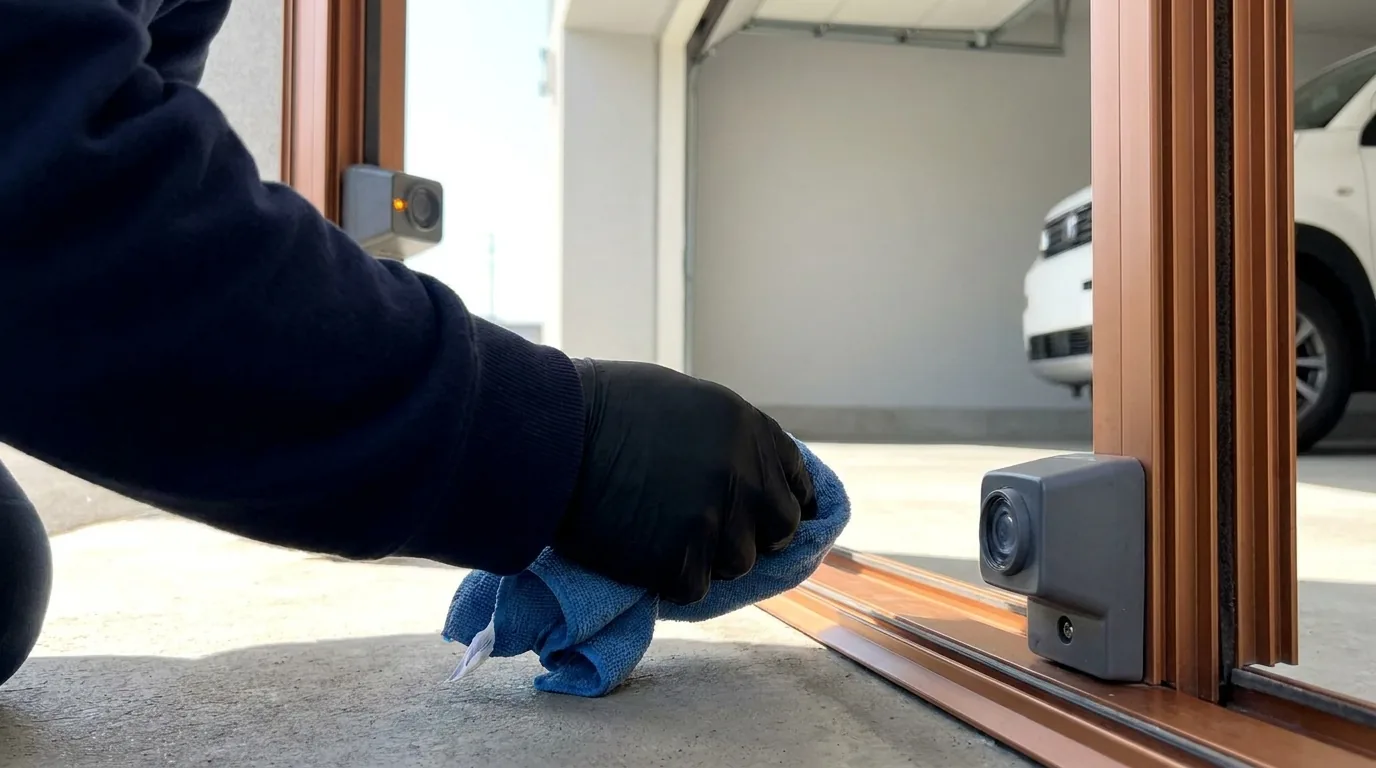
Two small sensors face each other across the opening, near floor level, about ankle height. If the invisible beam between them is broken or misaligned, the door refuses to close and reverses. Look at them: most have an indicator light, and a blinking one is telling you exactly this.
Wipe both lenses with a cloth — dust, cobwebs and, in Perth, a fine film of blown sand are all it takes. Check nothing is sitting in the beam path, including things you have stopped seeing, like a bin or a bike wheel. And check that neither sensor has been knocked out of alignment by a car door or a stack of boxes; they need to point directly at each other.
One Perth-specific addition: low afternoon sun striking a sensor lens directly can confuse some units. If your door only misbehaves at a particular time of day, that is worth mentioning when you call.
2. Something actually in the way
Look along the full width of the bottom channel where the door meets the floor. Blown sand, leaf litter, bark and gravel build up there gradually, and the door genuinely is closing onto an obstruction. This is one of the most common causes in this city and it costs nothing to clear.
3. The travel limits have drifted
The motor is told how far to travel in each direction. If the close limit has drifted past the floor, the motor pushes the door into the ground, reads the resistance as an obstruction and reverses. This is a settings adjustment rather than a repair, but it is done on the motor's own programming and it needs to be set correctly against the door's actual travel — a limit set generously to "make it work" defeats the obstruction detection that keeps the door safe.
4. Something is binding in the guides or tracks
A bent guide, a seized roller, a dry bearing or a curtain running slightly out of square all increase the force needed to move the door. The motor reads that spike as an obstruction and stops. You can often hear this one — the door will sound laboured or will hesitate at the same point every time.
The door will not move at all
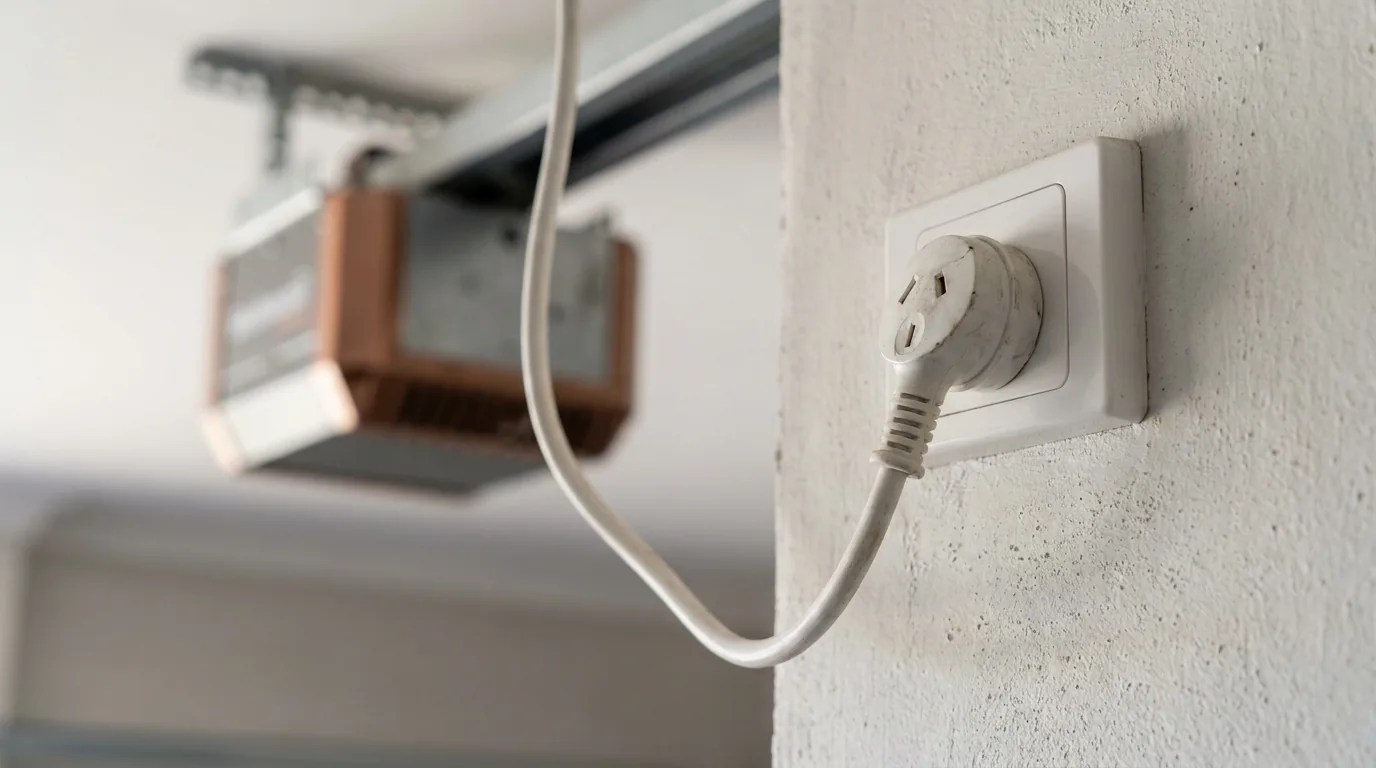
- **Check the obvious.** Power at the socket, and whether the wall button works when the remote does not — that separates a handset problem from a motor problem immediately.
- **Check the manual release.** If someone disengaged it during a blackout and never re-engaged it, the motor will run happily and the door will not move. Very common after a storm, and completely free to fix.
- **Check whether the door is locked.** Roller doors have centre locks and side bolts, and forcing a motorised door against an engaged lock bends things.
- **Listen.** A hum with no movement means the motor has power but cannot turn the load — usually a failed capacitor, a stripped gear, or a door that has become too heavy because a spring has gone.
Stop and call: the signs that are not DIY
Some symptoms mean the door is carrying load it was not designed to carry, and the correct response is to leave it alone.
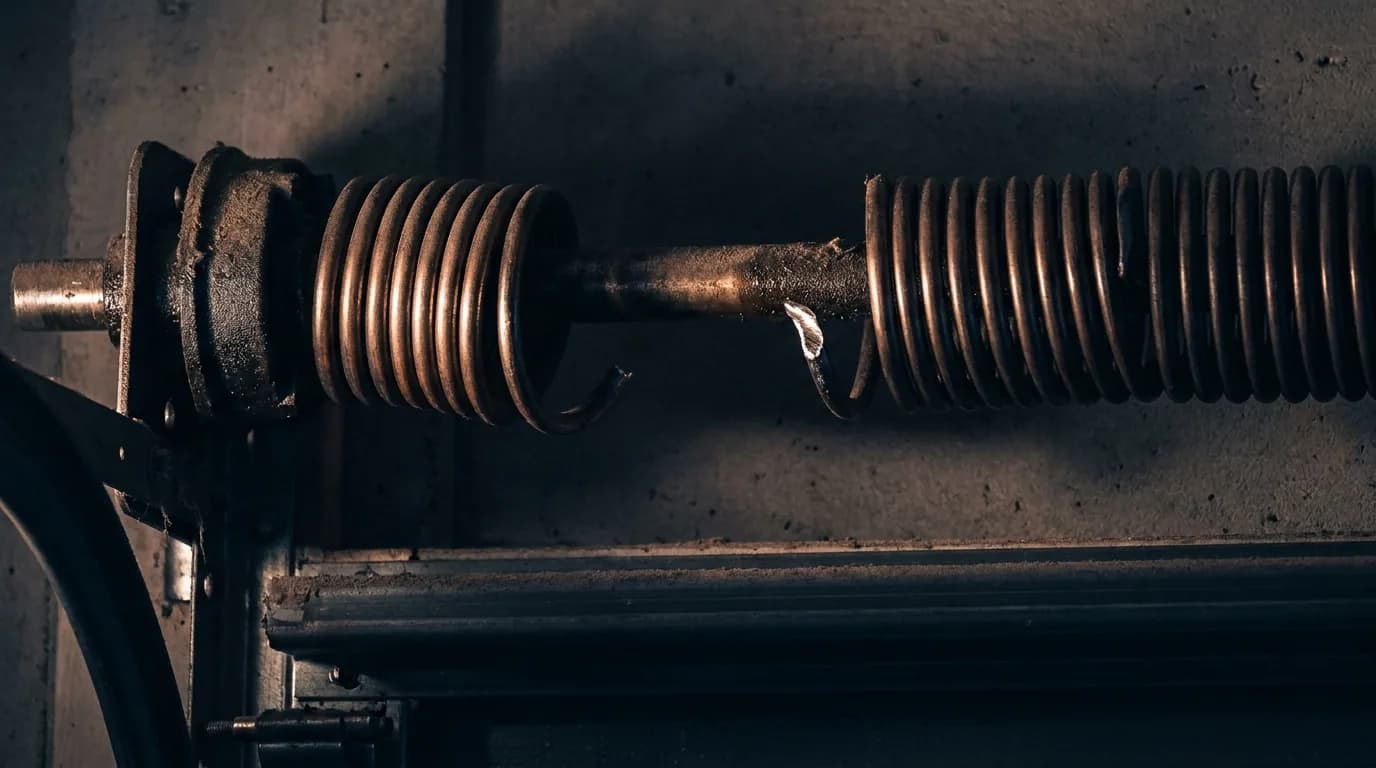
- **You heard a bang.** A single loud crack from the garage, often at night, is a torsion spring. The door is now a dead weight. Do not lift it, do not run the motor, and do not pull the manual release — releasing it means nothing is supporting the door.
- **The door has become very heavy** or will not stay up where you leave it.
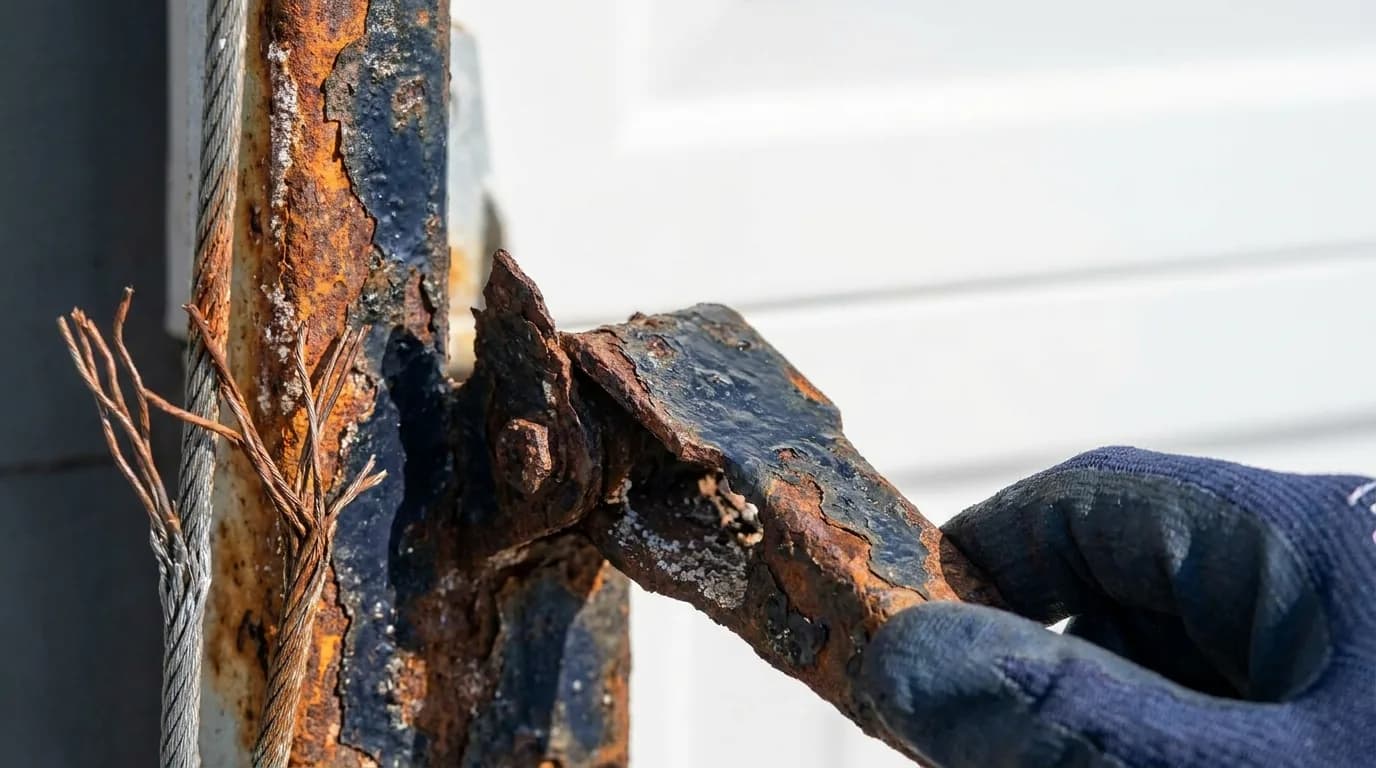
- **A cable has come off, snapped, or the door hangs visibly out of square.**
- **The door is off its tracks or out of its guides.** It is held by less than it was designed to be, and it can move suddenly. Keep people away from the opening.
- **Anything involving the spring assembly.** We will not describe how to work on one, in any voice. It is the one job on a garage door that has genuinely killed people.
If the house is standing open and it is the middle of the night, that is what emergency repairs exist for — and the first job when we arrive is to secure the opening, before anything is discussed.
What to tell us when you ring
Symptoms narrow the cause a long way before we arrive, which is how we bring the right parts the first time. Useful things to mention:
- Whether the motor runs at all, and what it sounds like
- The exact point in the travel where it stops
- Whether you heard a bang, and when
- Whether the wall button behaves differently to the remote
- Whether the beam indicator lights are blinking
- Whether anything has changed — a storm, a power cut, a knock from a car
And if it is one of the two-minute fixes, we would genuinely rather you found it yourself. If it is not, a garage door repair is usually a single visit — our vans carry the springs, rollers, cables and beams behind the great majority of faults.