Garage Doors in the Perth Hills: Gradient, Dust, Power Cuts and Bushfire-Prone Land
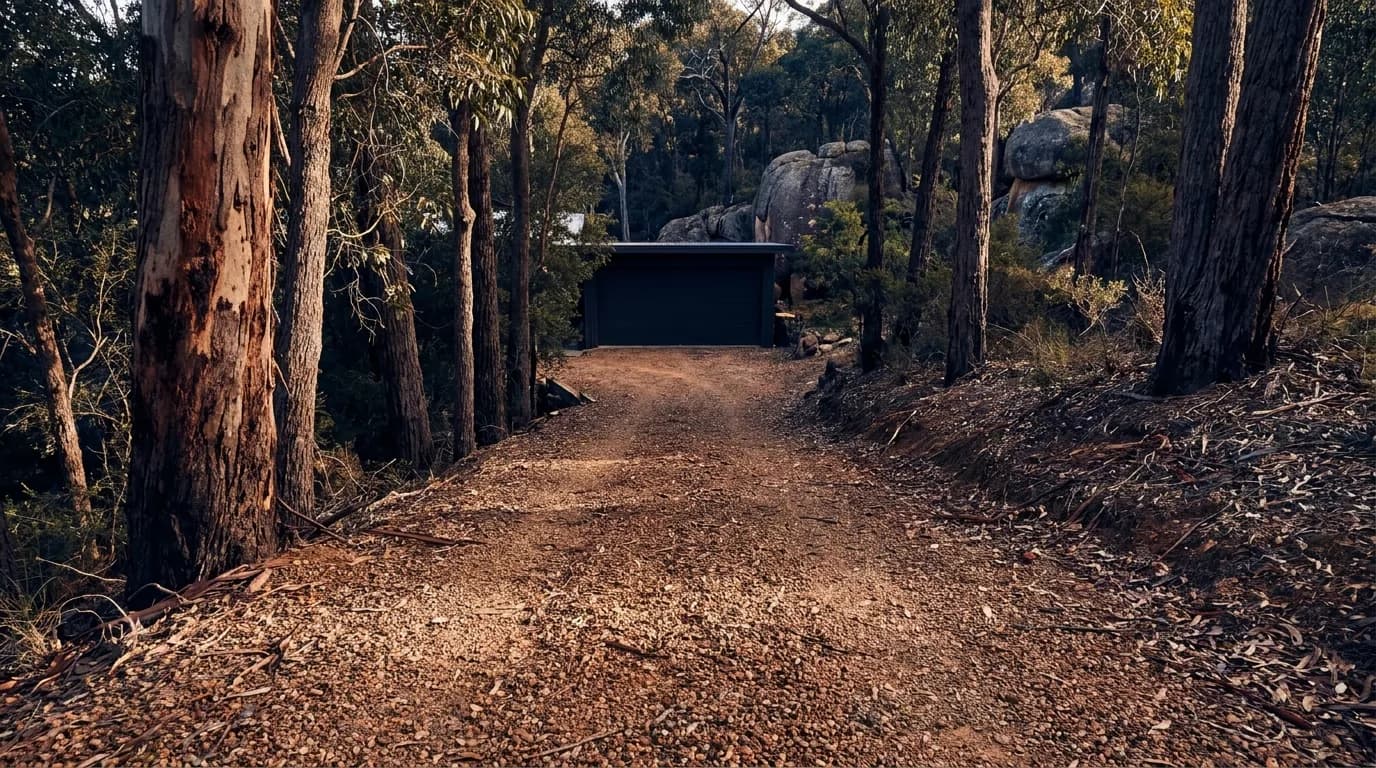
The Darling Scarp is a real dividing line for this trade, not a scenic one. A door in Kalamunda, Lesmurdie, Darlington, Mundaring, Roleystone or Gooseberry Hill has a materially different life from the same door in Willetton, and it is worth knowing why before you buy one or before you decide a fault is unusual.
Gradient
Hills driveways rise or fall steeply to the garage, and the practical consequence is that the door's bottom edge and the concrete are rarely parallel. The door seals at one corner before the other.
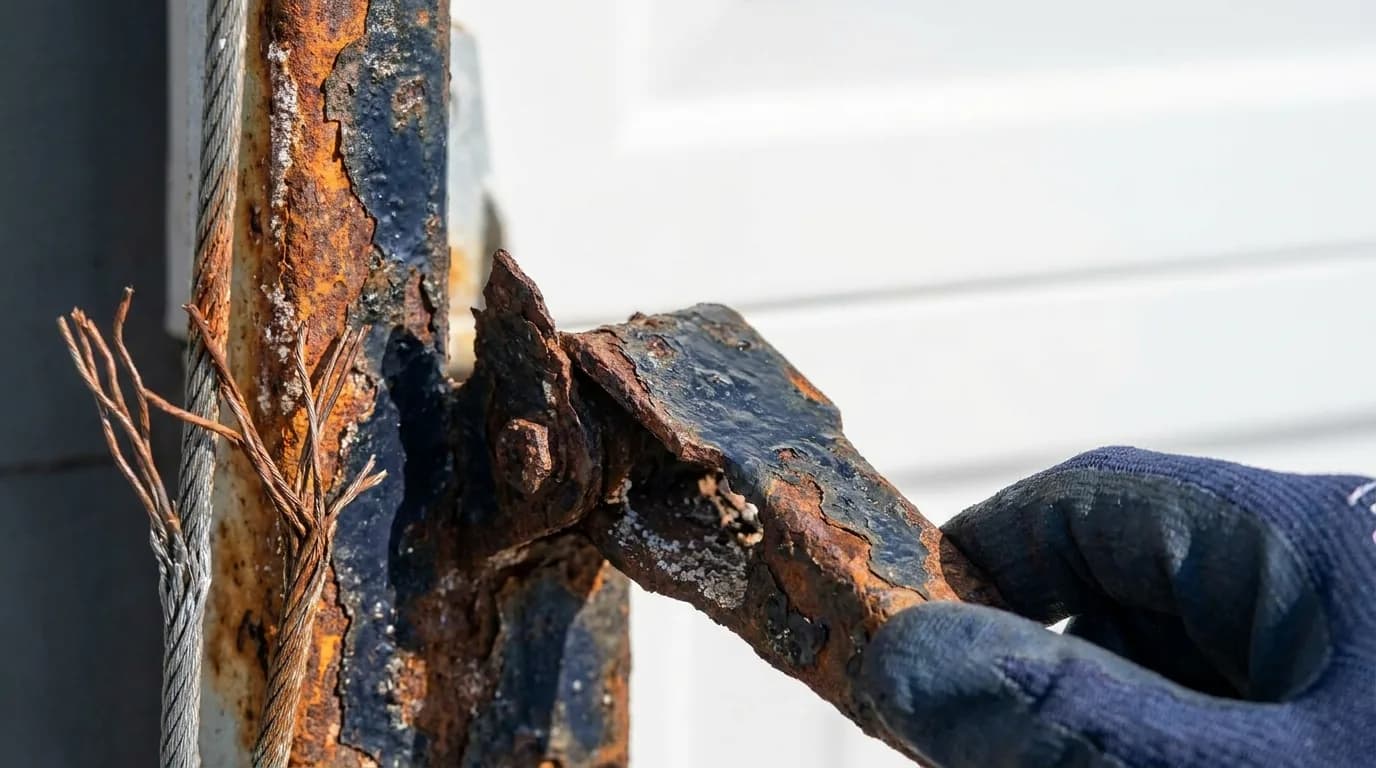
That produces a specific and predictable wear pattern. The seal compresses unevenly and perishes at the low corner first. Water finds the same corner in winter and sits there. On a roller door, the bottom rail begins corroding at that end well before the rest of it. And on a motorised door, the point where the door meets the ground unevenly can be read as an obstruction, causing it to reverse.
None of this is a fault in the door. It is geometry, and it is why a threshold seal or a tapered bottom seal is worth specifying up here rather than accepting the standard one.
Dust, which is not the same as sand
On the coastal plain the abrasive is blown sand. Up here it is gravel and track dust off unsealed driveways, and it behaves differently in two ways that matter.
It is more angular, so it is more abrasive per particle. And it does not wash out of a guide channel the way sand does — it packs, and it stays. A door on a long gravel approach can accumulate enough grit in its guides in a year to noticeably increase the force needed to move it, which the motor then reads as load.
The consequence is a shorter service interval. If your driveway is unsealed, expect to need servicing more often than the standard twelve months — and expect the guides and bottom channel to be the main event when it happens.
The usual warning applies with extra force here: do not spray lubricant into the guides. In a dusty environment it turns directly into grinding paste. Clear them instead.
Power, and why the manual release matters more up here
The hills lose supply in storms more often than the plain does, and get it back later. That turns a piece of trivia into a genuine safety item.
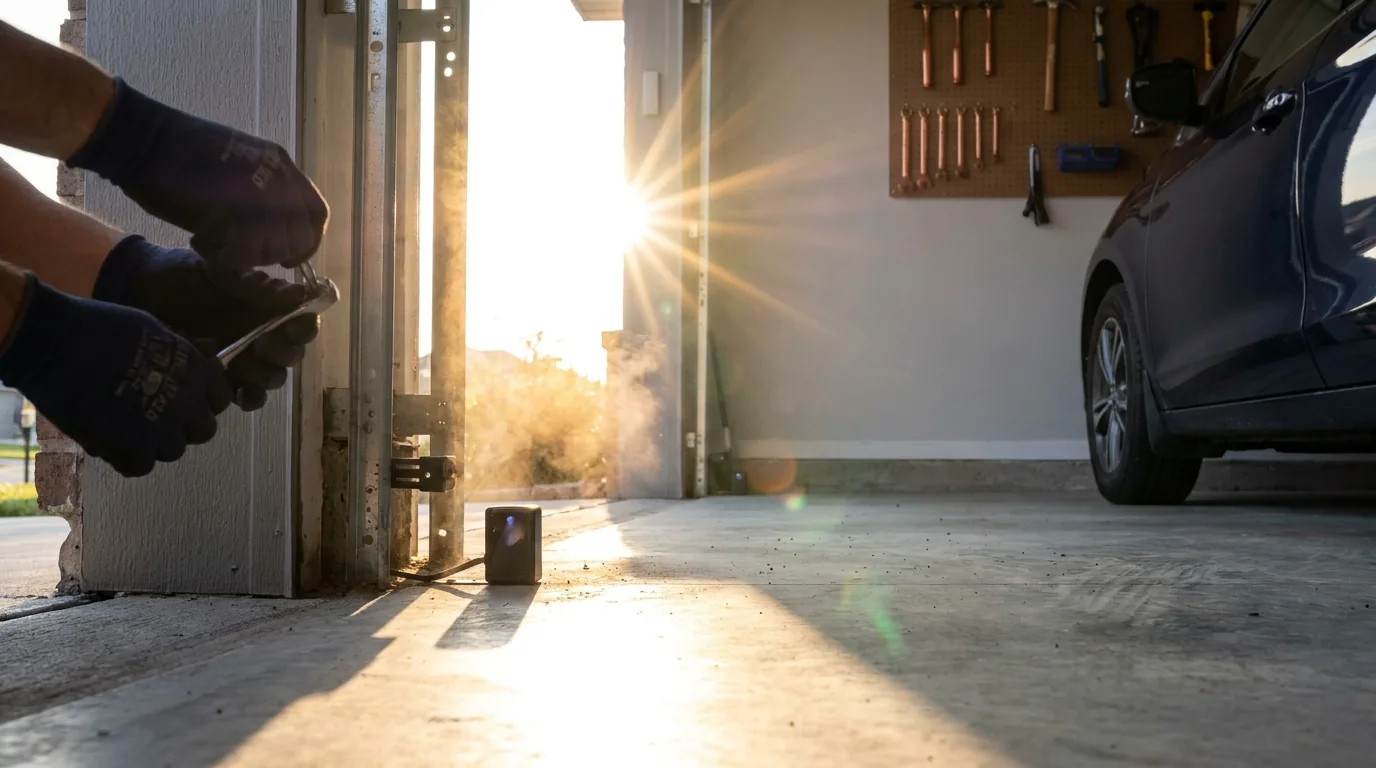
Every household above the scarp should know where the manual release cord is and how to use it, in the dark, without instructions. If you have never located yours, do it now rather than during an outage. We demonstrate it on every install and every service, and we ask people to do it themselves once so the memory sticks.
One important exception, which is the same everywhere but has more chances to bite here: if a spring has failed, do not pull the release. Releasing the motor on a door with no working spring removes what is holding the door up.
Battery backup is not a luxury above the scarp
This is the single upgrade we recommend most often in the hills, and the one people most often wish they had bought earlier. A battery backup unit lets the door operate normally through an outage.
The value is obvious on a steep driveway — a power cut otherwise decides whether the car is in or out, with no easy middle option — and it is more than convenience during a bushfire-season event, when being able to get a vehicle out without wrestling a heavy door on a slope genuinely matters. We fit them as standard on hills motor installations rather than offering them as an extra.
Bushfire-prone land and materials
Parts of the Perth Hills are designated bushfire prone areas, and where that designation applies it can affect material choices and detailing on building work, through Bushfire Attack Level assessment.
We will be careful here, because this is an area where confident-sounding advice does real harm. A BAL rating is a certified assessment for a specific property — it is not something a tradesperson can assign, estimate or assume from a suburb name. We will not tell you what your property's rating is, and you should be wary of anyone who does without an assessment in front of them.
What we can do is work to a rating you already have, discuss detailing such as seals and gaps that are commonly relevant, and tell you honestly when a question needs to go to your local government or a qualified assessor rather than to us.
One related point that is safe to state generally: a well-sealed door is worth having up here for several reasons at once — embers, dust, heat and vermin all use the same gaps. Perished bottom seals and weather strips are cheap and are among the more worthwhile things to keep on top of.
Bigger doors, and longer trips
Hills properties tend to have larger garages, workshops and sheds, which means wider openings and heavier doors — and heavier doors make correct spring sizing a real calculation rather than a formality.
They also mean longer travel for us, and we would rather be straight about that than optimistic. A hills call-out is scheduled rather than squeezed in, and we give a realistic arrival window at booking. Bush litter in every track, wider doors, unsealed approaches and distance all add up to a job that is genuinely different from the same door on the plain.